


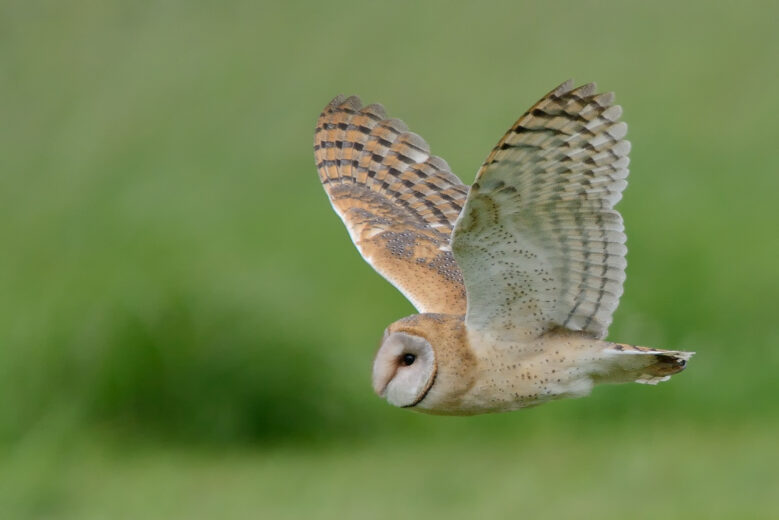
A synanthropic species, the Western Barn Owl inhabits structurally diverse agricultural land with a high density of small mammals. It hunts in open terrain, but prefers to hunt along hedges, fallow areas and field margins. Its breeding sites are usually located inside buildings, in crevices or in nest boxes.
In Switzerland, the Western Barn Owl breeds predominantly in lowlands below 700 m asl. The population fluctuates sharply from year to year.
Providing nesting aids in extensive agricultural areas is an efficient method for the conservation of the Western Barn Owl. Its food supply can be boosted by staggered mowing, establishing ecological compensation areas and building small structures.

©
© Ruedi Aeschlimann
Conservation programme for birds in Switzerland - Priority species
Western Barn Owl
Distribution and development
Schematic distribution

Schematic distribution during the breeding season (ochre), in winter time (dotted in blue) or during migration periods (dotted in vinaceous).
Breeding bird index
The graph shows the relative evolution of the breeding population in Switzerland (100 = mean value). Example: A value of 130 means that the population in the corresponding year was 30% above the mean value of the entire period considered.
Habitat and food

©
© Jacques Laesser
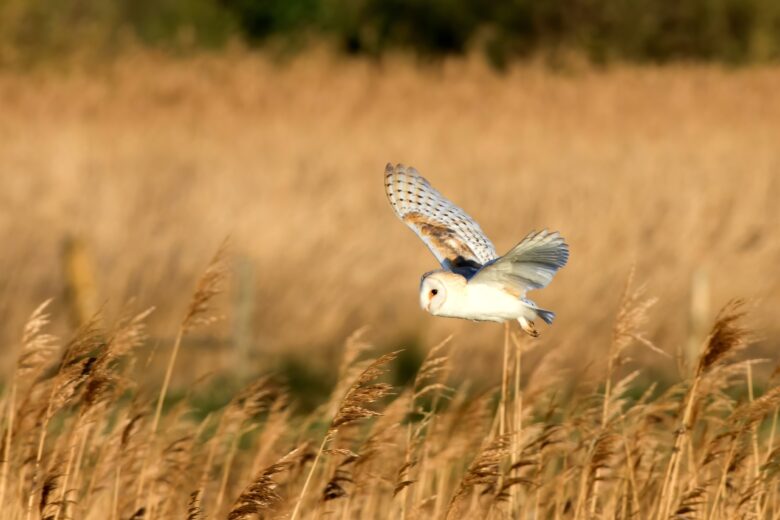
The Western Barn Owl hunts in open terrain along hedges, fallow areas and field margins.

©
© Anja Marty
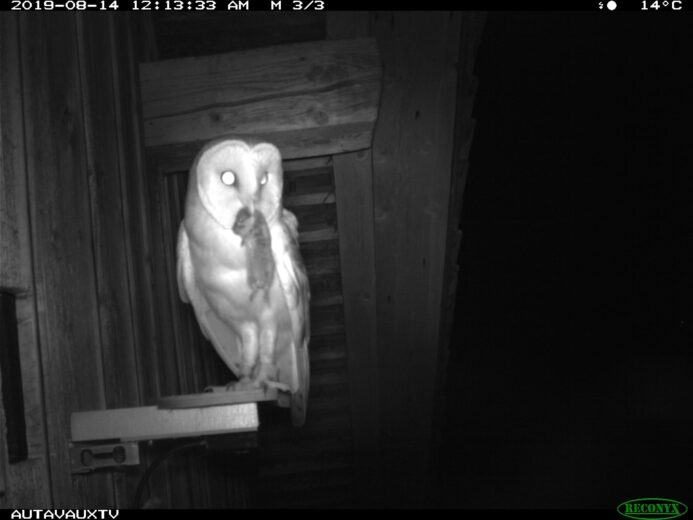
Nest sites are located inside buildings, and it will readily use nest boxes where it can fly into them from outside or inside the building.


Conservation programme for birds in Switzerland - Priority species
Western Barn Owl
A synanthropic species, the Western Barn Owl inhabits structurally diverse agricultural land with a high density of small mammals. It hunts in open terrain, but prefers to hunt along hedges, fallow areas and field margins. Its breeding sites are usually located inside buildings, in crevices or in nest boxes.
In Switzerland, the Western Barn Owl breeds predominantly in lowlands below 700 m asl. The population fluctuates sharply from year to year.
Providing nesting aids in extensive agricultural areas is an efficient method for the conservation of the Western Barn Owl. Its food supply can be boosted by staggered mowing, establishing ecological compensation areas and building small structures.
In Switzerland, the Western Barn Owl breeds predominantly in lowlands below 700 m asl. The population fluctuates sharply from year to year.
Providing nesting aids in extensive agricultural areas is an efficient method for the conservation of the Western Barn Owl. Its food supply can be boosted by staggered mowing, establishing ecological compensation areas and building small structures.
Birds of Switzerland

Western Barn Owl
To the species profile in the bird database
Project managers


Threats, activities and forecasts
Limiting factors and threats
The main limiting factors for the Western Barn Owl are the disappearance of nesting sites, poorer availability and accessibility of small mammals due to intensive agriculture, periods of bad weather during the breeding season and snowy winters. Road traffic also claims many victims.
Breeding season
- Loss of nesting sites due to building renovations or disappearance of field barns.
- More intensive agricultural practices and development make its hunting areas less attractive.
- Periods of bad weather during the nestling period increase the mortality of young birds.
Migration/ Winter
- Food availability and accessibility in winter have a significant impact on populations; in particular, longer-lasting snow cover leads to a sharp reduction in numbers.
- Risk of collisions with road traffic, especially for dispersing young birds.
Necessary activities
Monitoring
- As part of the Swiss Ornithological Institute’s integrated population monitoring, volunteers in a number of project areas collect data on population and breeding success annually.
Conservation
- Extensification of agriculture, conservation of ecological compensation areas and of structures such as conservation headlands, fallow areas, clusters of bushes, hedges and various boundary structures.
- Preservation of species-rich grassland.
- Perches can increase hunting success.
- Maintaining and expanding nesting site provision, installation and upkeep of nest boxes.
Research
- Various current research activities on habitat selection, breeding success and dispersal behaviour.
- Impact of social and non-social environmental factors on the fitness of Western Barn Owls are being studied.
- Studies are underway on the influence of light pollution on the behaviour of the Western Barn Owl.
Prospects for success and prognostics
- Benefits from mild winters.
- Thanks to the nesting aids provided, the availability of nesting sites is not a limiting factor in some regions.
- High losses due to increasing road traffic.
- The Western Barn Owl population will be able to maintain its current level only if ongoing species protection and conservation activities are continued.
Conservation measures and stakeholders

Create ecological compensation areas
Wildflower strips, field margins and extensively managed late-use meadows and pastures provide an adequate and accessible food supply.
Agriculture
Cantons

Staggered mowing
Staggered mowing leads to a mosaic of low and tall vegetation and optimises food accessibility and supply.
Show more
Agriculture
Cantons

Promote singing or hunting perches
Individual shrubs, trees, hedges or wooden posts can serve as hunting perches and improve habitat quality.
Agriculture
Nature conservation
Private individuals

Offer and maintain nesting aids
The installation and maintenance of nest boxes close to suitable hunting areas compensates for the lack of natural nesting opportunities.
Agriculture
Nature conservation
Parcs
Private individuals

Take nesting sites into consideration in construction projects
Known nesting sites of building breeders (e.g. via inventories in municipalities) should be taken into account in construction projects.
Show more
Agriculture
Cantons
Municipalities
Planners and architects
Private individuals

Promote extensive farming
Leaving meadows unfertilised and not using pesticides or staggered mowing promote habitat quality (food supply).
Agriculture




©
© Ruedi Aeschlimann
Birds of Switzerland
Western Barn Owl
The white underparts, heart-shaped face, the nocturnal and crepuscular lifestyle and the hissing and wheezy snoring in attics have led to numerous superstitious ideas about the Common Barn-owl. When hunting, it does not only rely on its eyesight but can perfectly locate its prey by ear at the faintest sound even when it is pitch-dark. With a purposeful, spooky-soundless flight, the C...
To the species profile in the bird database
