


The Eurasian Eagle-Owl nests on cliffs and, less commonly, on buildings, on the ground or on trees, from the lowlands up to the tree line. It needs open and semi-open terrain for hunting and is not afraid to approach built-upurban areas. Its broad range of prey includes mainly small and medium-sized mammals and birds up to the size of a kite.
Since its eradication in large parts of Switzerland, repopulation has occurred over wide areas, particularly since 2000, due in part to significant inward migration from France and Germany. The Swiss population currently stands at at least 250–300 pairs, with an upward trend in most places.
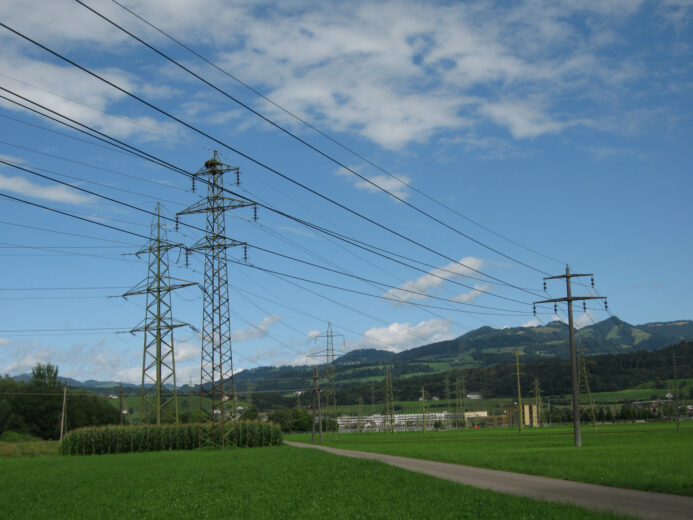
Protection measures include: repairing hazardous electricity poles, taking breeding sites into account when planning infrastructure, protecting breeding sites from disturbance and intensifying population monitoring.

©
© Ralf Kistowski
Conservation programme for birds in Switzerland - Priority species
Eurasian Eagle-Owl
Distribution and development
Schematic distribution

Schematic distribution during the breeding season (ochre), in winter time (dotted in blue) or during migration periods (dotted in vinaceous).
Breeding bird index
The graph shows the relative evolution of the breeding population in Switzerland (100 = mean value). Example: A value of 130 means that the population in the corresponding year was 30% above the mean value of the entire period considered.
Habitat and food

©
© Marc Kéry
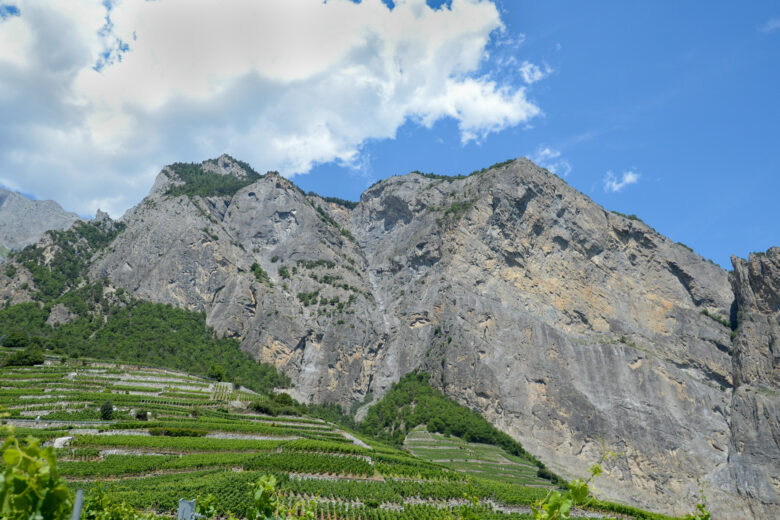
Natural nesting site on rocks in the Jura.

©
© Marc Kéry
Quarry in the Jura inhabited by Eurasian Eagle-Owl.

©
© Raphael Arlettaz
Nesting site on rocks in the Alps.


Conservation programme for birds in Switzerland - Priority species
Eurasian Eagle-Owl
The Eurasian Eagle-Owl nests on cliffs and, less commonly, on buildings, on the ground or on trees, from the lowlands up to the tree line. It needs open and semi-open terrain for hunting and is not afraid to approach built-upurban areas. Its broad range of prey includes mainly small and medium-sized mammals and birds up to the size of a kite.
Since its eradication in large parts of Switzerland, repopulation has occurred over wide areas, particularly since 2000, due in part to significant inward migration from France and Germany. The Swiss population currently stands at at least 250–300 pairs, with an upward trend in most places.
Protection measures include: repairing hazardous electricity poles, taking breeding sites into account when planning infrastructure, protecting breeding sites from disturbance and intensifying population monitoring.
Since its eradication in large parts of Switzerland, repopulation has occurred over wide areas, particularly since 2000, due in part to significant inward migration from France and Germany. The Swiss population currently stands at at least 250–300 pairs, with an upward trend in most places.
Protection measures include: repairing hazardous electricity poles, taking breeding sites into account when planning infrastructure, protecting breeding sites from disturbance and intensifying population monitoring.
Birds of Switzerland

Eurasian Eagle-Owl
To the species profile in the bird database
Project managers


Threats, activities and forecasts
Limiting factors and threats
Main population limitation is lack of suitable nesting sites on rocks; nesting on buildings and possibly in trees or on the ground will probably lead to some easing of the situation. The main anthropogenic causes of death are electrocution, collisions with road/rail traffic and cables, and possibly pesticides.
Breeding season
- Needs undisturbed crevices and hideaways in rocks for breeding and as a daytime refuge.
- Threatened locally by human activities (e.g. climbing, photography, forestry work, helicopter flights, shooting noise).
- Mortality on man-made structures a problem all year round.
Migration/ Winter
- Breeding pairs are non-migratory, young birds may roam far and wide. However, the above-mentioned hazards apply throughout the year to both established breeding pairs and roaming non-breeders.
Necessary activities
Monitoring
- Some information on population and breeding success is gathered by volunteers (e.g. in Jura, Solothurn, Basel-Country, Aargau, Fribourg, Valais, Grisons).
- Protection-relevant information, e.g. on preventing disturbance, is often collected in this way.
- Existing monitoring should be coordinated, intensified and expanded; when birds are found dead, causes of death should be systematically recorded.
Conservation
- Repair of hazardous electricity poles, particularly in existing territories (especially medium-voltage power poles, railway overhead contact line masts).
- Taking breeding sites into account when planning infrastructure such as roads, lines, cables and lighting.
- Protecting breeding sites from disturbance caused by climbing and other human activities.
Research
- Improve knowledge of population and population dynamics, e.g. by expanding the areas monitored and intensifying population monitoring, in particular through the use of acoustic loggers.
Prospects for success and prognostics
- Since the 2000s in particular, the Eurasian Eagle-Owl has become increasingly widespread first in northern Switzerland and then in many other parts of the country, presumably due in particular to inward migration from the already expanding populations in France and Germany.
- Further increase in population density and extension of the range appear likely.
- In some areas of the inner and southern Alps (Ticino), populations still stagnating.
Conservation measures and stakeholders

Remediate dangerous cables / masts
Making hazardous electricity poles safe, particularly in areas where there are existing Eurasian Eagle-Owl territories.
Cantons
Communities
Municipalities

Prevent / minimize disturbances
Protecting Eurasian Eagle-Owl nesting sites from intentional disturbance (e.g. photographers) and unintentional disturbance (e.g. climbing, geo-caching, forestry work).
Cantons
Forestry
Municipalities
Nature conservation
Private individuals




©
© Ralf Kistowski
Birds of Switzerland
Eurasian Eagle-Owl
The Eurasian Eagle-owl is an imposing sight. During the day it likes to roost in undisturbed, well covered sites in cliffs from where it can survey its territory. It occurs above the treeline as well as in the lowlands and is quite undemanding as long as the area is rich in prey. The Eurasian Eagle-owl still suffers due to collisions with overhead wires and traffic....
To the species profile in the bird database